












TMAC: Machine Tool Monitoring System
Real-Time CNC Tool Monitoring That Protects Your Process, Optimizes Every Cut, and Enables Confident Unattended Machining
Unexpected tool failures, material variation, and changing cutting conditions can quickly lead to scrap, downtime, and lost productivity. TMAC (Tool Monitoring Adaptive Control) continuously monitors every cut in real time to detect tool wear, tool breakage, abnormal cutting conditions, and process instability before they become costly problems. When machining conditions change, TMAC responds instantly—stopping the machine, retiring worn tools, or automatically adjusting feed rates to maintain optimal cutting performance.
The result is more stable machining, longer tool life, shorter cycle times, reduced scrap, and greater confidence running unattended production.
Whether you're machining aerospace components, medical parts, automotive components, or high-volume production parts, TMAC provides the confidence to run more efficiently—with less operator intervention.
Why Manufacturers Need CNC Tool Monitoring
Every machining process changes over time. Tools wear. Inserts chip unexpectedly. Material hardness varies. Stock conditions change. Machines experience normal variation. Left unchecked, these changes reduce productivity, impact part quality, and increase manufacturing costs.
TMAC continuously monitors the machining process and automatically responds to changing cutting conditions, delivering measurable improvements that help manufacturers machine more efficiently, consistently, and confidently, including:
Extending Tool Life
TMAC replaces tools based on actual cutting performance instead of conservative estimates or fixed part counts.
Reducing Cycle Times
Adaptive Control automatically optimizes feed rates as cutting conditions change.
Improving Process Stability
Maintains consistent machining performance despite changing material conditions and tool wear.
Protecting Machines & Tooling
Detects abnormal machining conditions before they become costly failures.
Increasing Confidence in Unattended Machining
TMAC monitors every cut automatically with less dependence on operator intervention.
What is TMAC — Tool Monitoring Adaptive Control?
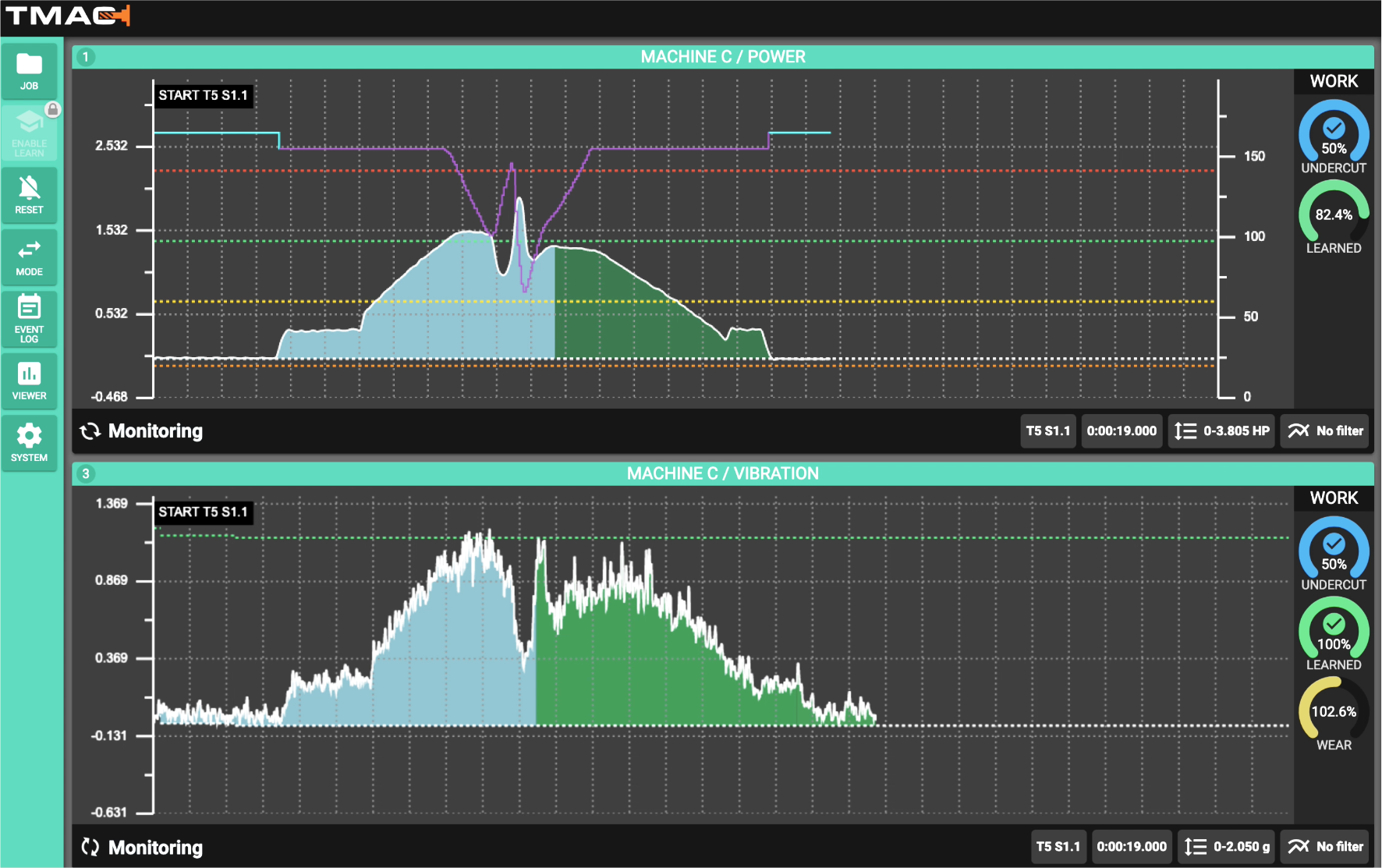
TMAC is an advanced CNC Tool Monitoring and Adaptive Control system that continuously monitors the machining process using true spindle motor power measurements and high-resolution sensor inputs to accurately detect changes in cutting performance.TMAC learns the optimum cutting power for each tool and cutting section and compares it to user defined cutting parameters. Depending on the application, TMAC monitors either peak cutting power or the total work performed by the tool (power over time) to provide the most accurate indication of tool wear and machining performance.
By continuously comparing live cutting conditions against user-defined thresholds, TMAC detects tool wear, tool breakage, undercut conditions, and abnormal machining events before they impact production.
How TMAC Detects Tool Wear
As a cutting tool wears, more power is required to remove the same amount of material. TMAC continuously measures true spindle motor power throughout the machining cycle and compares it to the optimum cutting power learned for each tool and cutting section. For many applications, TMAC monitors the total work performed by the tool (power over time) to provide an even more accurate indication of gradual tool wear.
This intelligent monitoring allows manufacturers to maximize usable tool life while maintaining consistent part quality and reducing unnecessary tool changes.
Benefits Include
- Longer tool life
- Reduced tooling costs
- Improved dimensional consistency
- Fewer unnecessary tool changes
- Reduced scrap and rework
TMAC calculates power over time or work of the cutting tool as a more accurate measurement of how the tool is wearing over time
Immediate Tool Breakage Detection — Reacts in Milliseconds
Not every machining problem develops gradually.
Broken tools, chipped inserts, material inconsistencies, and unexpected machining conditions require an immediate response.
TMAC continuously monitors every cut and reacts within 5 milliseconds when a catastrophic machining event is detected. When an Extreme Limit is exceeded, TMAC immediately stops the machine and retracts the tool to help protect parts, tooling, fixtures, and machine tools before significant damage can occur.
By responding in milliseconds instead of seconds, TMAC helps manufacturers prevent catastrophic machine crashes, reduce scrap, minimize downtime, avoid costly repairs, and protect high-value workpieces. The result is a safer, more reliable machining process and greater confidence running unattended production.
Adaptive Control Machining That Optimizes Every Cut
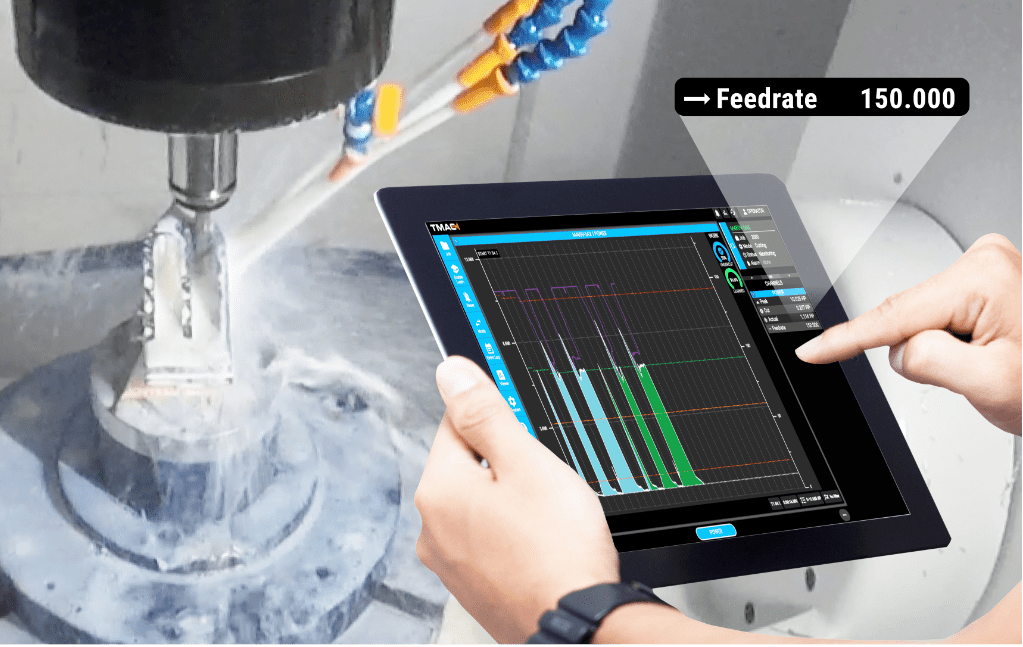
Most CNC programs are written using conservative feed rates to account for worst-case cutting conditions. TMAC Adaptive Control continuously monitors cutting conditions and automatically adjusts feed rates throughout the machining cycle.
When cutting loads decrease, feed rates automatically increase to reduce cycle time. When cutting loads increase due to harder material, greater tool engagement, or tool wear, feed rates are reduced to maintain optimal cutting conditions and protect the tool.
The result is:
- Reduced cycle times
- Extended tool life
- Improved machining stability
- Better surface finish
- More consistent production
Adaptive Control keeps every tool operating within its optimal cutting window without operator intervention.
See how adaptive control technology works to automatically optimize feed rates during cutting!
TMAC Takes Action in Real Time
TMAC doesn't just monitor the machining process—it automatically responds to changing cutting conditions to protect parts, tooling, and machines while optimizing machining performance.
Integrated Sensors for Complete Process Visibility
Powered by a dedicated high-speed data processor, TMAC supports multiple monitoring technologies, allowing manufacturers to select the optimal monitoring strategy for each machining application. By monitoring multiple sensor channels simultaneously, TMAC provides comprehensive machine and process monitoring for greater protection, control, and optimization.
- Power
- Vibration
- Coolant flow
- Coolant pressure
- Strain
- Spindle speed
With additional integrated analysis options, including:
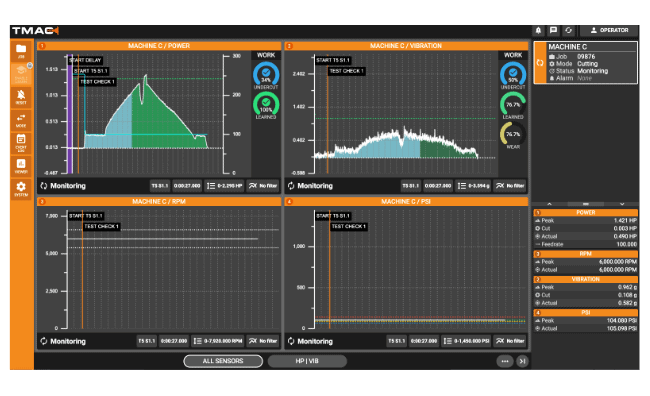
All graphs are time aligned so data is correlated across all sensor monitoring channels — for increased process visibility.
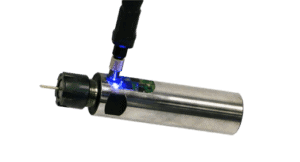
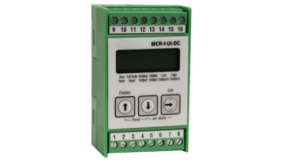
TMAC Sensor Specifications




Turn Machining Data Into Process Improvements
TMAC provides more than real-time process protection—it delivers the insight needed to continuously improve machining performance.
Analyze historical cutting data, compare machining cycles, investigate abnormal events, validate process improvements, and optimize cutting programs using actual production data.
With greater visibility into the machining process, manufacturers can reduce variability, improve quality, optimize machining strategies, and make more informed process decisions over time.
TMAC Data Viewer
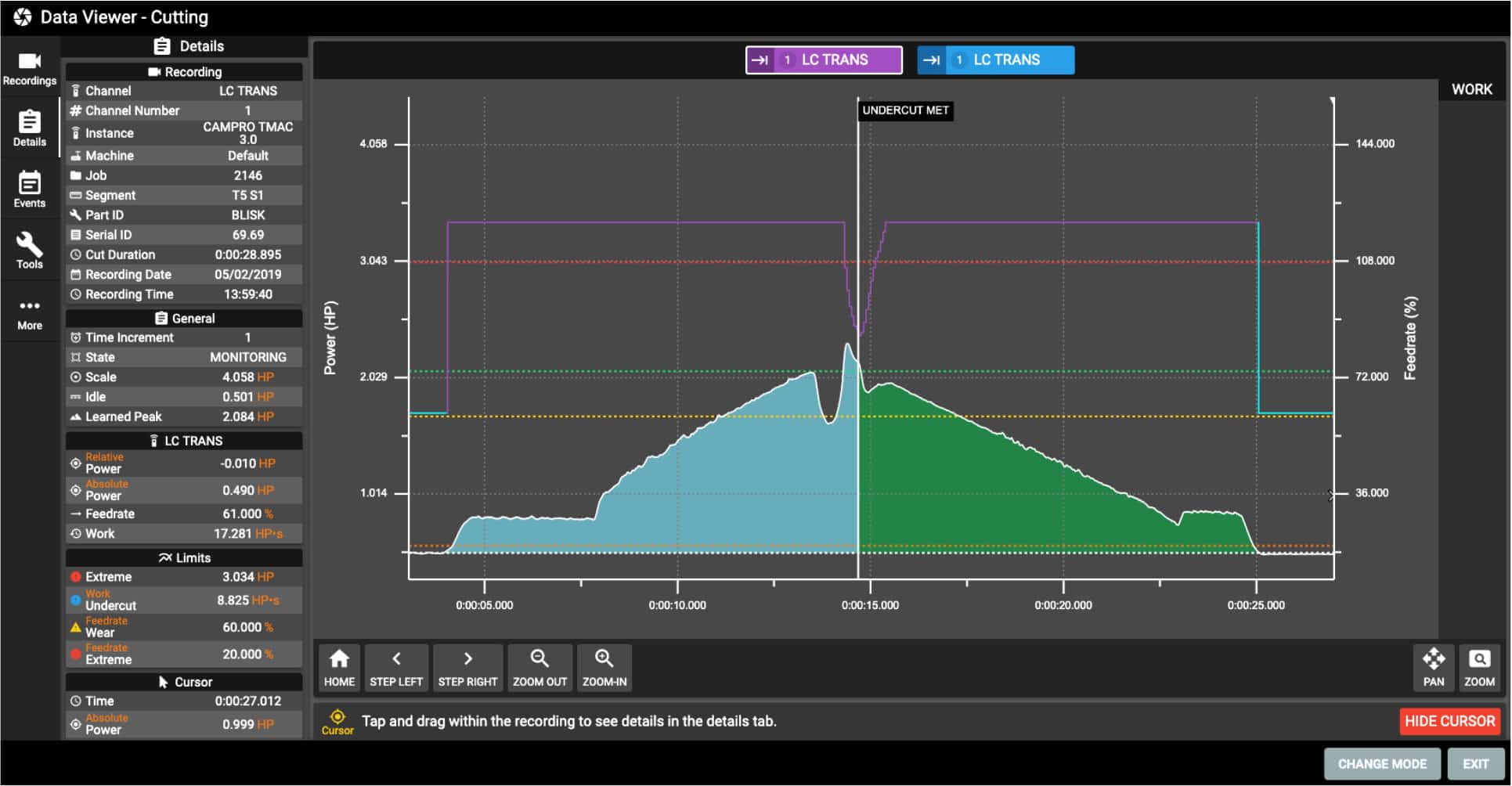
- All monitored data and events are stored and can be exported in various formats for analysis
- Data files can be opened simultaneously to view graphical differences
- Cutting data files can be overlaid to compare cuts
- CNC position data allows the user to inspect the CNC axis positions, program line number, and spindle RPM to interrogate alarms and anomalies at any point in the cut
TMAC Event Viewer
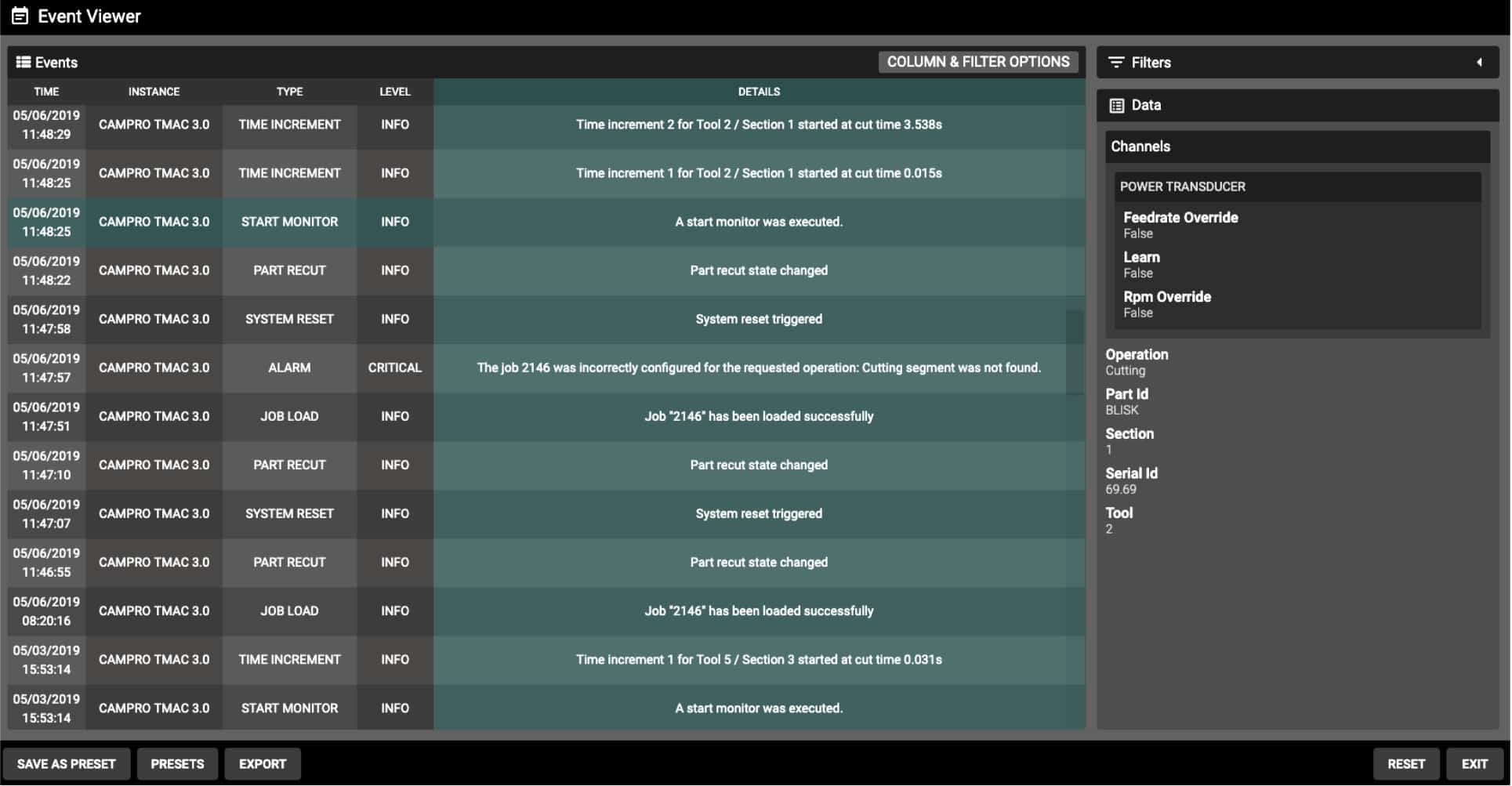
- Displays detailed information for all events (starts, stops, alarms, etc.)
- Custom events can be created to call out specific points in the cutting operation
- Users can apply custom filters to view, sort, and export events for analysis
Why Manufacturers Choose TMAC
TMAC helps manufacturers transform machining from a reactive process into a controlled, optimized, and data-driven operation.
Manufacturers rely on TMAC to:
- Detect tool wear before part quality is affected
- Prevent catastrophic tool failures
- Reduce scrap and rework
- Extend tool life
- Automatically optimize feed rates
- Improve machining consistency
- Protect expensive tooling and machine tools
- Increase unattended machining reliability
- Improve Overall Equipment Effectiveness (OEE)
- Gain greater visibility into machining performance
Applications
TMAC is trusted by manufacturers worldwide across virtually every CNC machining environment, including:
- Aerospace
- Medical
- Defense
- Automotive
- Heavy Equipment
- Precision Machining
- Swiss Machining
- CNC Turning
- Milling
- Horizontal & Vertical Machining Centers
- Multi-Task Machines
- Automated Manufacturing Cells
- Lights-Out Production
Built to Scale Production
From remote access to centralized configuration, TMAC is designed to simplify system management while supporting the needs of today's connected manufacturing environments.
- Remote system access
- Customizable user security and permissions
- Auto-scaling display for any screen size or resolution
- Multi-monitor support
- Remote notification of machine alarms
- Centralized system configuration
- Multi-machine deployment
- Flexible, scalable system architecture
- Remote diagnostics and troubleshooting
- Monitor all TMAC systems simultaneously
Production Monitoring Integration


TMAC ai, a collaboration between, Datanomix, and Caron Engineering, continuously analyzes sensor data from each cut, generating adaptive models that pinpoint out-of-tolerance conditions with exceptional precision. Learn more...

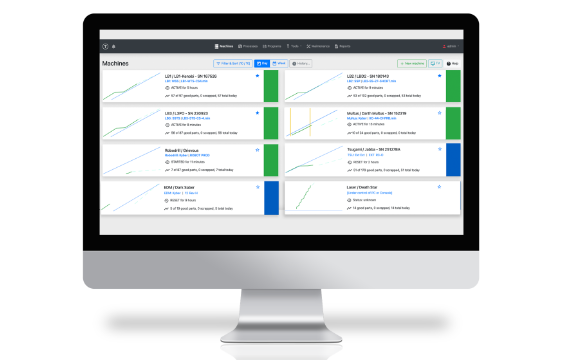
OnTakt Software from Wolfram Manufacturing Technologies enables machine shops of all sizes to easily connect machines in a single dashboard to capture TMAC data, visualize operations, and react on the shop floor. Learn more...
TMAC delivers more accurate and reliable tool monitoring by combining true spindle motor power measurement, high-resolution sensors, and a dedicated high-speed processor that continuously analyzes cutting conditions in real time. TMAC applies the optimal monitoring strategy for each machining application—including peak power, power over time (work), vibration, and other sensor inputs—to accurately detect tool wear, tool breakage, and abnormal machining conditions.
TMAC also goes beyond monitoring by automatically responding to changing conditions. It safely retires worn tools, reacts to catastrophic tool failures within 5 milliseconds, and continuously adjusts feed rates through Adaptive Control to optimize cycle time, extend tool life, and maintain a stable machining process.